Week 1: The Real Start to Real Results!
IN THIS LESSON
What We’re Teaching:
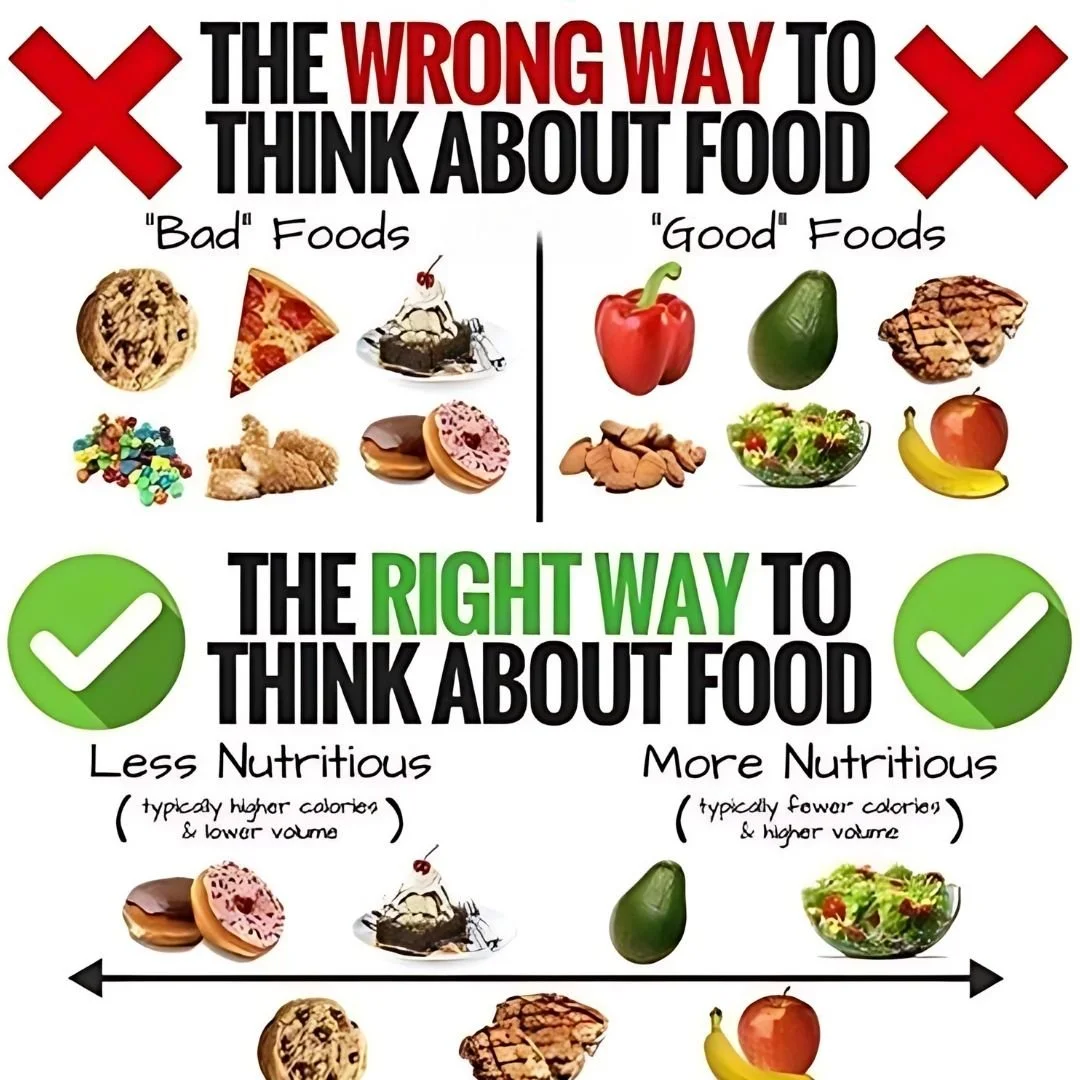
For years, diet culture has pushed the idea that some foods are “bad” and should be avoided at all costs. But here’s the truth: food doesn’t have a moral value. A donut isn’t “bad,” and broccoli isn’t “good”—they’re just foods with different nutritional profiles.
When you label foods as “bad,” you’re not only creating guilt when you eat them—you’re also making them more desirable. Psychologically, the moment you tell yourself “I can’t have that,” your brain focuses on it even more. This creates a cycle of restriction, craving, and often bingeing when your willpower inevitably wears down.
Instead, think of food choices on a spectrum:
Sometimes foods: Higher calorie, less nutrient-dense options for special occasions or enjoyment.
Everyday foods: Nutrient-dense choices that fuel your body and support your goals.
By shifting your mindset, you’ll learn how to enjoy all foods in moderation without guilt. When no food is off-limits, cravings lose their power. Balance is the key to sustainability.